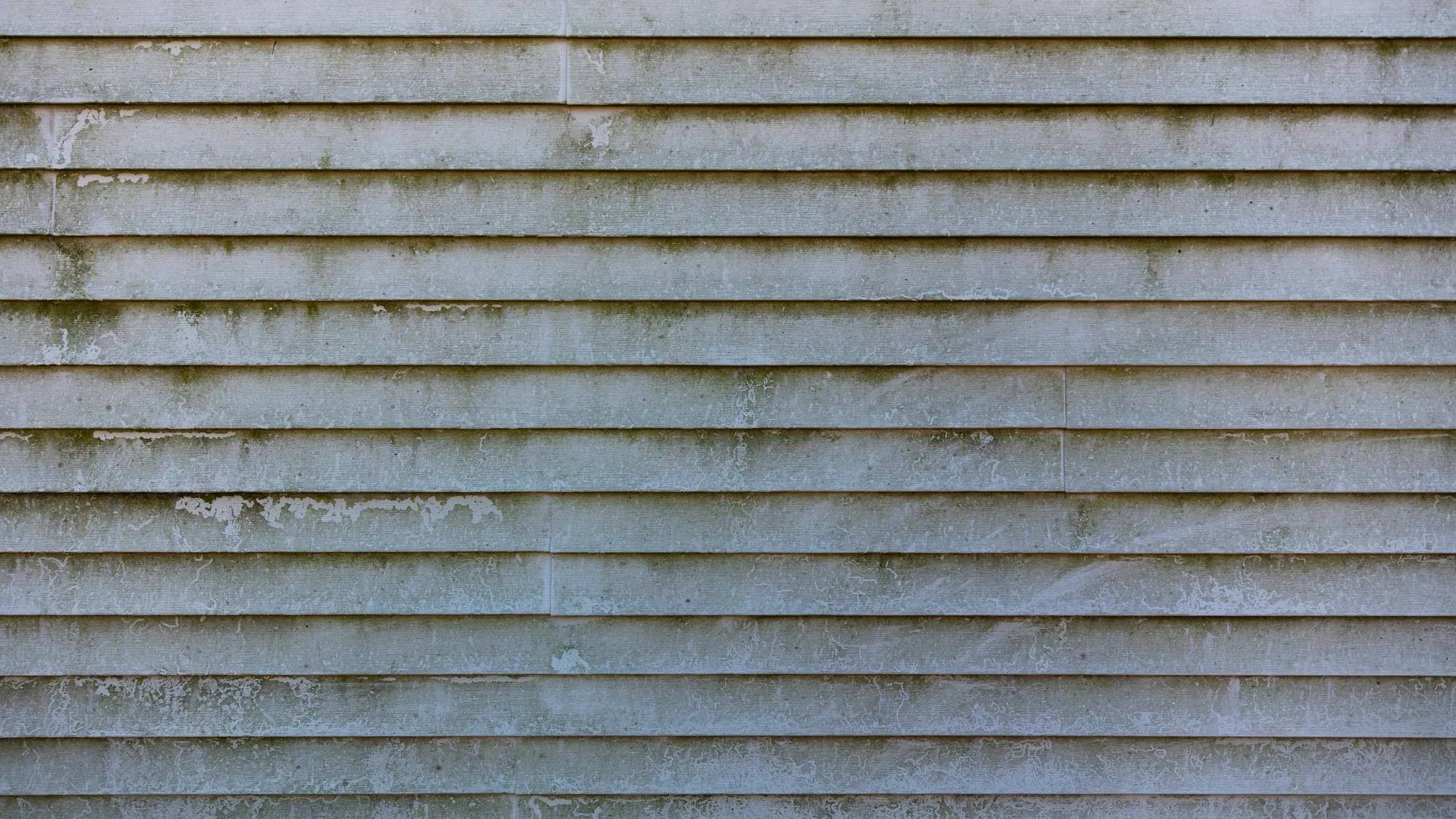
Siding does two jobs: it makes the house look the way it does, and it keeps water out of the walls. It usually stops doing the second job well before it looks bad enough to notice from the street. Here are the signs worth walking around your house to check for.
One — warped, buckled or wavy panels. Siding that no longer lies flat has usually been pushed by heat, by moisture behind it, or by being nailed too tight. Either way, the gaps it opens let water in.
Two — cracks, holes and loose pieces. One cracked board after a hailstorm is a repair. Cracks and loose panels on several walls mean the material has become brittle with age.
Three — soft or rotting spots. Press on the siding and trim near the ground, under windows and at corners. Anything that gives under your thumb is holding water, and the wood behind it probably is too.
Four — mildew, mold or dark streaks that return soon after you wash them off. Surface mildew is normal in Carolina humidity. Growth that keeps coming back in the same place, especially at seams, points to moisture getting behind the siding.
Five — signs on the inside. Peeling paint, bubbling wallpaper or a musty smell on an exterior wall can all be siding that's no longer keeping water out.
Six — fading so heavy that the color is gone. Faded siding isn't a leak, but it is a sign that the material has taken years of sun and is near the end of its life. Seven — you find yourself repairing or repainting it every year or two. At that point replacement is usually the cheaper path.
A few of these on one wall is often a siding repair. Several of them around the whole house is a replacement. RC Roofing and Siding LLC does both across Upstate South Carolina and western North Carolina — call (864) 421-3659 for a free estimate.